Car Insurance in Poland for Foreigners • Buy OC Without PESEL, Documents and Prices
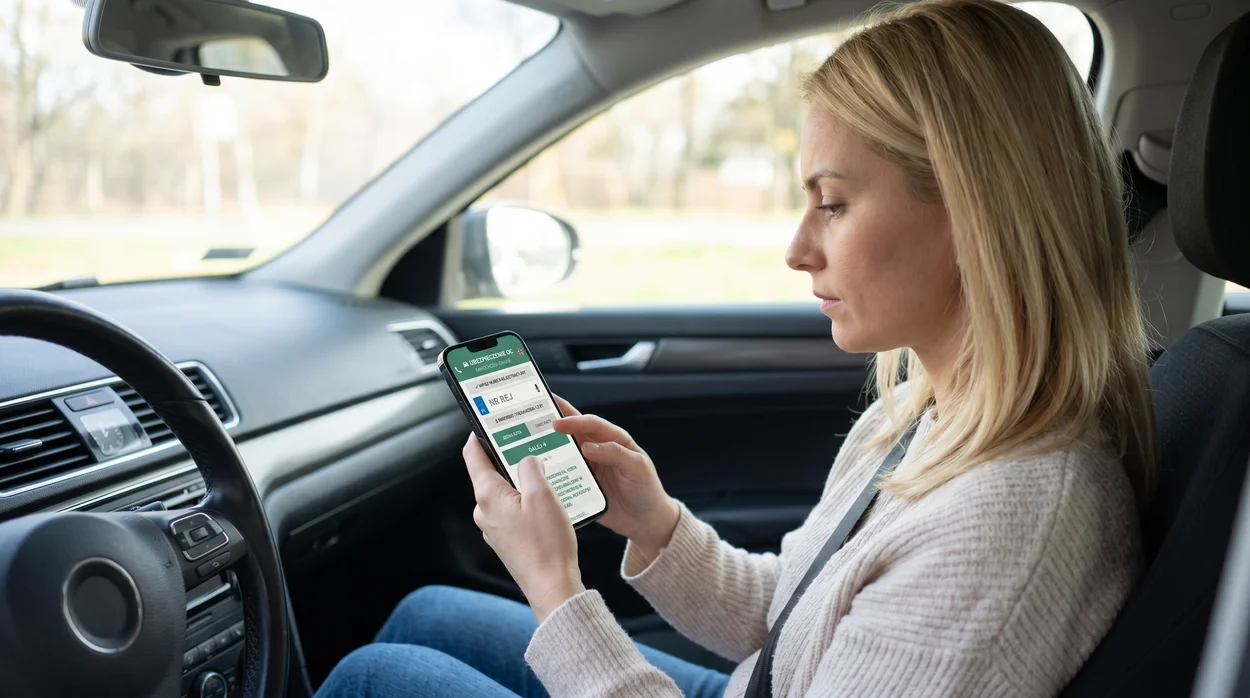
Moving to Poland, buying a car here, or bringing one in from abroad? Getting car insurance as a foreigner doesn't have to be a nightmare — but only if you know exactly what the insurer will ask for and when the policy actually starts. This guide is the procedural walkthrough: which documents you send, what happens without a PESEL, whether a foreign driving licence is a problem, how payment works from a foreign bank account, and the precise moment your vehicle must be insured. Updated for 2025/2026 with current prices and rules.
If you are looking for the commercial overview of policy types instead, see our main car insurance in Poland page. This article covers the paperwork side.
Is Car Insurance Mandatory in Poland?
Yes. Every vehicle registered in Poland must have OC (Odpowiedzialność Cywilna) — third-party liability insurance, known internationally as MTPL. This is not optional, and the obligation is tied to ownership, not to whether you drive. The general rule is simple: a vehicle should be insured in its country of registration. So a Polish-plated car needs Polish OC; a German-plated car needs German OC.
If the vehicle has no valid policy, the UFG (Ubezpieczeniowy Fundusz Gwarancyjny) charges a penalty for every single day without cover — the gap is calculated day by day, not per incident. Fines issued by the UFG in 2025 can reach over 8 600 zł for a passenger car left uninsured for more than 14 days, and the amounts are recalculated every year against the minimum wage. You can read more about how the UFG database and Polish supervision work in our guide on how insurance works in Poland — KNF, UFG and your rights as a driver.
OC in Poland is sold as an annual policy — 12 months, with the option of paying in instalments. There is no monthly rolling contract as in the UK or US. The legal framework for foreigners is explained in detail in our article on mandatory MTPL (OC) insurance in Poland.
How Much Does Car Insurance Cost in Poland in 2025–2026?
A very large number of factors feed into the premium: the age of the owner, the registered address, the make, model and engine capacity of the vehicle, its year of production, and the claims history attached to the owner. Two identical cars insured by a 24-year-old in Warszawa and a 45-year-old in a small town in Łódzkie can differ by several hundred złoty. Realistic ranges for 2025:
| Cover | Typical annual cost | Notes |
|---|---|---|
| OC (third-party liability) | 400–1 800 zł | Mandatory. Higher end for drivers under 25 and owners with no Polish history |
| AC (Autocasco / comprehensive) | 800–4 000 zł | Voluntary; depends on vehicle value, deductible and scope |
| NNW (personal accident) | 30–150 zł | Covers driver and passengers regardless of fault |
Read our full breakdown of AC (Autocasco) insurance in Poland — what it covers and whether it's worth it, and of NNW personal accident insurance. For a wider comparison of market averages, see our price of car insurance in Poland guide.
Foreigners without a Polish driving history often receive higher initial quotes because insurers cannot verify their bonus-malus class. Working with an agent who can present documented foreign no-claims history to the right insurer makes a significant difference.
Buying Car Insurance Without a PESEL — What Actually Happens
This is the single most common question we get, so here is the decisive answer: yes, you can buy OC without a PESEL number — but you will get significantly fewer offers. The reason is technical, not legal. Without a PESEL, the insurer's system cannot retrieve your Polish insurance history from the UFG database, so a number of insurers simply decline to quote or apply their default (highest) rating.
In practice this means:
Fewer insurers in the comparison — instead of 15–20 offers you may see only a handful. That is normal and not a sign that something went wrong.
No automatic no-claims discount — your Polish history is invisible to the system, so the discount has to be argued manually with documents.
Manual handling — most automated online forms will freeze or reject the application. An agent enters the data manually and issues the policy on the basis of your passport or national ID.
If you plan to stay in Poland longer than a few months, applying for a PESEL at the local urząd gminy is worth doing purely for the number of offers it unlocks at your next renewal. Note also that comparison websites behave differently for foreigners — see how insurance comparison websites really work and what to watch out for.
Does a Foreign Driving Licence Matter?
For OC, essentially no. Polish third-party liability insurance follows the vehicle and its owner, not the licence of the person driving. You can buy OC while holding a Ukrainian, Georgian, Indian, British or German licence, and the policy covers any authorised driver of the vehicle. Insurers do not ask to see your licence when issuing OC.
Two caveats worth knowing:
AC and NNW — for voluntary cover some insurers do ask about driving experience and licence issue date, because it affects the rating.
Road legality is a separate matter — an EU/EEA licence is valid in Poland indefinitely; a non-EU licence generally needs to be exchanged for a Polish one within 6 months of establishing residence. That is a traffic-law obligation, not an insurance one, but driving on an invalid licence can complicate a claim.
Foreign Plates: Insuring a Car Registered Abroad
If your car still carries Ukrainian, German, Lithuanian or British plates, the rule above applies: the vehicle should be insured in its country of registration. A valid Green Card or an EU-issued policy covers you in Poland for the period of your visit. Polish insurers will generally not issue a standard annual OC policy for a foreign-registered vehicle.
Once you become a resident and use the car permanently in Poland, the correct sequence is to re-register the vehicle in Poland and then buy Polish OC. The same goes for temporary Polish plates (tablice tymczasowe) — cover is available, but usually only through an agent, since automated tools reject temporary registration numbers.
What Documents Do You Need?
To receive a quote and have a policy issued as a foreigner, the agent will ask you to send:
A photo of your passport or of the national identity document of your country of citizenship — this is required simply to calculate the offer, not only to sign it. A clear photo of the data page is enough.
The vehicle purchase agreement (umowa kupna-sprzedaży) — you must send this. If you bought from a dealer, the invoice serves the same purpose.
A Polish address — you must provide one. The address is a rating factor (it influences the premium) and it is also where policy correspondence goes.
Vehicle registration document (dowód rejestracyjny) — Polish, or the foreign equivalent if the car is not yet re-registered.
PESEL number — if you have one. If not, say so upfront so the agent knows which insurers to approach.
Previous insurance history — optional but useful. A documented clean record from abroad can reduce the premium with some insurers, though it is never applied automatically.
Insurance and Registration: The Exact Timing
This trips up almost every foreigner, and most wydział komunikacji (vehicle registration office) websites state it incorrectly. The reality: the vehicle does not have to be insured at the moment you file for registration at the wydział komunikacji — even though the offices' own pages usually say it does. However, it must be insured no later than on the day of registration, before the vehicle is put into traffic.
So the safe sequence is: buy the car → submit the registration paperwork → have the OC policy in force on the registration date, before you drive. Any day the car exists as your property without cover is a day the UFG can charge for.
How Payment Works — And When Your Policy Is Actually Issued
Payment is almost always made upfront, by bank transfer to the insurer's or agency's bank account. Card payment at a counter is the exception, not the rule. Three consequences you need to plan for:
Transfers from a foreign bank account can take several days to arrive. If you are paying from a Ukrainian, British or US account, start the process early — do not leave it to the day of registration.
Factor in currency conversion costs — the premium is denominated in złoty, and the exchange spread plus transfer fees are on you. Sending exactly the invoiced amount from a foreign-currency account often results in a shortfall.
The policy is issued only once the payment is booked on the bank account — sending a screenshot or PDF confirmation of the transfer is not sufficient. Money in the account is what triggers issuance.
OC is bought for a full year, and instalments are possible (typically 2–4 payments) if you prefer to spread the cost — the first instalment still has to clear before the policy is issued.
Border Insurance vs. Polish OC — What's the Difference?
If you've just crossed into Poland from a non-EU country without a Green Card, you may have bought border insurance (ubezpieczenie graniczne) at the crossing point. This is a short-term OC policy valid for 30 days, designed specifically for vehicles from countries outside the Green Card system.
Border insurance is not a long-term solution. It is far more expensive per day than a standard annual OC policy and offers only the minimum mandatory cover. Once the vehicle is registered in Poland and you have a Polish address, switching to standard OC saves money and gives you access to AC, NNW and assistance.
Step-by-Step: How to Buy Car Insurance in Poland as a Foreigner
Collect the file — photo of your passport or national ID, the vehicle purchase agreement, the registration document, your Polish address, and your PESEL if you have one.
Decide on cover — OC is mandatory for 12 months. Add AC for newer or financed cars, NNW for low-cost personal protection.
Get quotes — use the Magro OC calculator or send your documents to an agent. Expect fewer offers if you have no PESEL.
Review the offer — check scope, exclusions, deductibles (for AC) and assistance limits. Magro's English-speaking team will translate the OWU (General Insurance Terms) clauses that matter.
Pay by transfer, in good time — full amount or first instalment, allowing several days if the money comes from a foreign account, and covering conversion costs.
Receive the policy after the payment is booked — issuance follows the money landing in the account, not the transfer confirmation.
Be insured before you drive — at the latest on the day of registration, before the vehicle enters traffic. Keep a printed or digital copy in the car; police can also check the UFG database electronically.
If your situation is non-standard — no PESEL, temporary plates, foreign-registered vehicle, payment from abroad — the English-speaking team at Magro Ubezpieczenia handles the case manually and finds the insurers that will actually quote.
What Happens If You Have an Accident?
Your OC covers damage you cause to other vehicles, property and people — but not damage to your own car (that is what AC is for). Document the scene, exchange details, complete a written statement of the circumstances (oświadczenie sprawcy) and report the claim to the at-fault driver's insurer.
For a detailed walkthrough, see our guide on what to do after a car accident in Poland and how to file a claim.
Frequently Asked Questions
Can I get car insurance in Poland without a PESEL?
Yes. A PESEL is not a legal condition for buying OC. But without it your Polish insurance history cannot be retrieved, so you will receive markedly fewer offers and no automatic no-claims discount. An agent can issue the policy on the basis of your passport or national identity document.
What exactly do I have to send to get a quote?
A photo of your passport or of the national ID document of your country of citizenship, the vehicle purchase agreement, and a Polish address. The registration document is needed too if the car is already registered. Without those, no insurer can calculate a premium.
Must the car be insured before I go to the wydział komunikacji?
No — the vehicle does not need to be insured at the moment of registration, despite what most registration office websites state. It must, however, be insured no later than on the day of registration, before it is put into traffic.
Can I pay by card, and when does cover start?
Payment is almost always upfront by bank transfer. The policy is issued once the money is booked on the bank account — a transfer confirmation is not enough. If you are paying from a foreign account, allow several days and remember to cover currency conversion costs so the full amount arrives.
Can I insure a car in Poland with a foreign driving licence?
Yes. OC follows the vehicle and its owner, not the licence. Insurers do not require a Polish licence to issue OC, although a non-EU licence should be exchanged for a Polish one within 6 months of establishing residence for road-law purposes.
My car has Ukrainian plates — do I need Polish OC?
A vehicle should be insured in its country of registration, so a Ukrainian-plated car runs on a valid Ukrainian policy or Green Card covering Poland. If you become a resident and use the car permanently here, re-register it in Poland and then buy Polish OC.
How much is the cheapest car insurance in Poland?
The cheapest OC policies for standard passenger cars start from around 400–500 zł per year for experienced drivers with a clean Polish claims history. Foreigners without a local record should budget 800–1 500 zł initially. Because the premium depends on so many variables — owner's age, address, make, model and engine capacity — the only reliable figure is a calculated quote.
Is border insurance enough for driving in Poland?
It meets the minimum legal requirement for short stays: 30 days, third-party liability only. For anyone residing here, an annual OC policy is cheaper per day and far broader.
Can I pay OC in instalments?
Yes. OC is sold for a 12-month period, and instalment plans (usually 2–4 payments) are available with most insurers. The first instalment must be booked before the policy is issued.
Can I buy car insurance in Poland in English?
Policy documents are in Polish, as required by law, but the Magro Ubezpieczenia team works fully in English and explains the terms, exclusions and deductibles before you sign or transfer anything.
What are the penalties for driving without insurance?
The UFG charges a penalty for each day the vehicle is uninsured. In 2025 the maximum for a passenger car uninsured for over 14 days exceeds 8 600 zł, and it applies even if the car never left the driveway — the duty is tied to ownership.
The Bottom Line
Buying car insurance in Poland as a foreigner is entirely manageable once you accept two things: the paperwork is document-driven (passport photo, purchase agreement, Polish address), and the policy only exists once the money is on the account. Plan the transfer early, be insured before the car moves on the day of registration, and expect fewer offers until you have a PESEL.
Use the Magro Ubezpieczenia OC calculator for an instant estimate, or send your documents to our English-speaking team in Łódź — 30+ years on the Polish market, and plenty of non-standard cases solved.