Fleet Insurance in Poland • How Companies Can Insure Multiple Vehicles
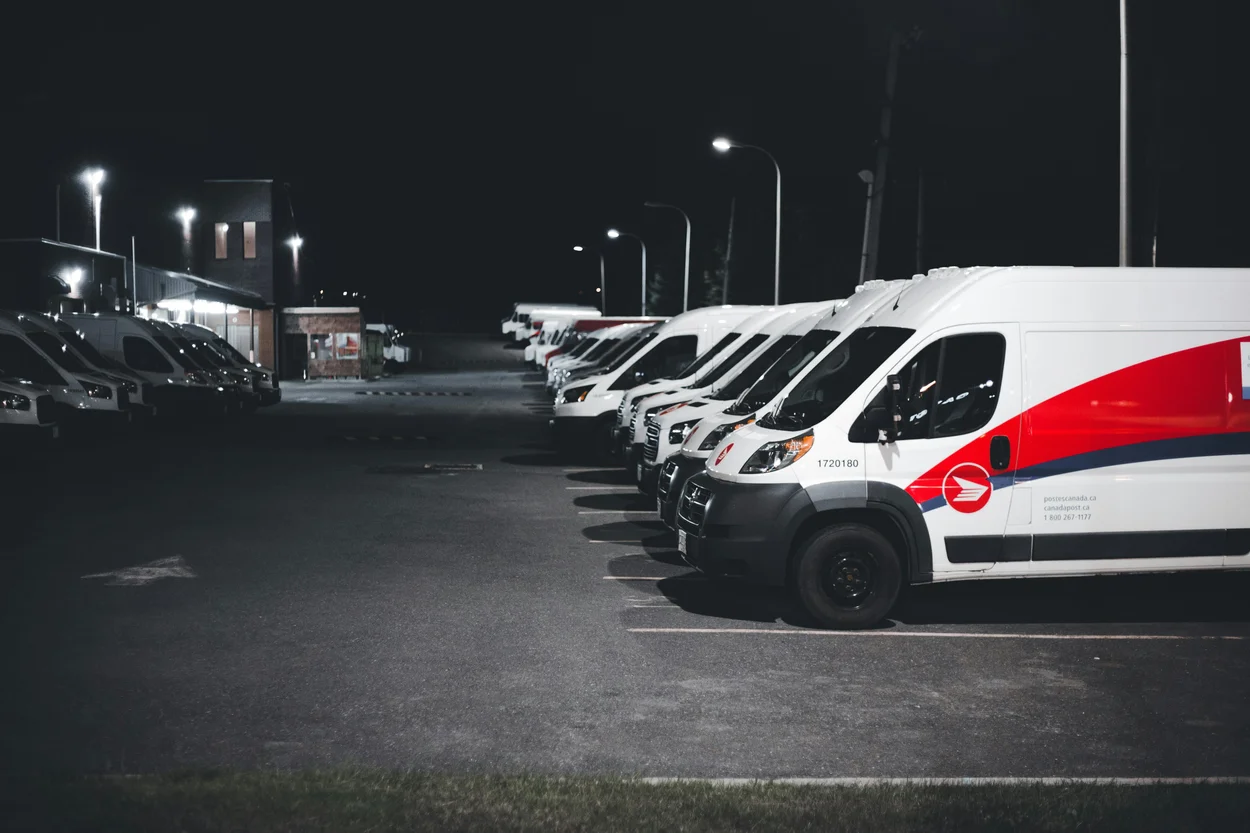
If your company operates four or more vehicles in Poland, you're sitting on a significant insurance optimization opportunity — or a significant risk, depending on how you approach it. Fleet insurance (ubezpieczenie floty samochodowej) is one of the most misunderstood areas of commercial insurance on the Polish market. Most business owners either insure each vehicle individually (overpaying by 15–30%) or sign a fleet deal without properly negotiating terms. Both approaches cost real money.
At Magro Ubezpieczenia, we've been helping companies structure fleet policies for over 30 years. This guide covers everything you need to know: how fleet insurance works in Poland in 2025/2026, which insurers offer the best programs, what discounts are actually achievable, current pricing benchmarks, and where companies consistently make expensive mistakes.
What Is Fleet Insurance and When Does It Apply?
Fleet insurance (ubezpieczenie flotowe) is a single insurance program covering all vehicles owned or leased by a company under one master agreement. Instead of negotiating individual policies for each car, van, or truck, you get a unified contract with standardized terms, a single renewal date, and — critically — volume-based pricing.
In Poland, most insurers define a "fleet" starting from 4 to 5 vehicles, though the exact threshold varies:
- PZU — fleet programs typically start at 5 vehicles
- Warta (Talanx Group) — offers fleet solutions from 4 vehicles
- Ergo Hestia — competitive fleet deals starting at 5+ units
- Allianz — fleet insurance from 5 vehicles, strong on mixed fleets
- Generali — flexible thresholds, sometimes accepting 4-vehicle fleets
- UNIQA — fleet programs with emphasis on risk management support
If you have fewer than 4 vehicles, you'll typically insure them individually — but an experienced broker can still negotiate multi-policy discounts. Read more about standard car insurance options in Poland if you're in that category.
Mandatory and Voluntary Coverage for Fleets
OC — Third-Party Liability (Mandatory)
Every vehicle registered in Poland must carry OC (odpowiedzialność cywilna) insurance. This is non-negotiable — the Ustawa o ubezpieczeniach obowiązkowych (Act on Compulsory Insurance) requires it, and the penalties for gaps in coverage are severe. For companies, a single uninsured vehicle can result in fines from the Ubezpieczeniowy Fundusz Gwarancyjny (UFG) exceeding PLN 8,600 per vehicle in 2026 (the rate is tied to the minimum wage and rises annually).
In a fleet policy, OC premiums are calculated collectively. The insurer evaluates your entire fleet's claims history, not each vehicle individually. This is where the first major advantage appears: one bad driver doesn't automatically destroy the premium for every vehicle, and conversely, a clean overall record brings meaningful discounts.
AC — Comprehensive / Casco (Voluntary but Often Essential)
AC insurance (autocasco) covers damage to your own vehicles — theft, collisions, vandalism, weather events. For fleets, AC is almost always included because:
- Company vehicles are capital assets that need protection
- Leasing companies require AC as a condition of the contract
- Replacing vehicles out of pocket is a significant unplanned expense
- Fleet AC premiums benefit from the strongest volume discounts
Additional Coverage Worth Considering
- NNW (następstwa nieszczęśliwych wypadków) — personal accident insurance for drivers and passengers, often required by labor regulations
- Assistance — roadside help, replacement vehicle, accommodation; critical for fleets where downtime means lost revenue
- GAP Insurance — covers the difference between the vehicle's market value and the outstanding lease/loan balance in case of total loss
- Cargo insurance — if your fleet carries goods (separate from standard AC/OC); see our OCP carrier insurance page for transport-specific cover
- Windscreen cover — standalone glass coverage to avoid AC claims for minor damage
Fleet Insurance Pricing Benchmarks for 2025/2026
Pricing on the Polish fleet market has shifted heading into 2026. Rising repair costs, parts inflation, and increased labour rates at workshops are pushing premiums upward, while competitive pressure among insurers and the growing adoption of telematics partially offset those increases. Here are realistic benchmark ranges we're seeing for well-managed fleets:
- OC per vehicle (passenger car fleet): PLN 800–2,200/year, depending on fleet size and claims history
- AC per vehicle (passenger car, value up to PLN 150,000): PLN 1,800–4,500/year in a fleet program vs. PLN 2,500–6,000+ individually
- OC per vehicle (light commercial / van): PLN 1,200–3,500/year
- OC per vehicle (heavy truck / tractor unit): PLN 3,000–8,000/year
- Full package (OC + AC + NNW + Assistance, passenger car): PLN 3,000–6,500/year per vehicle in a 10+ fleet
These ranges assume a loss ratio below 50% and a fleet based in a mid-risk region. Fleets in Warsaw or with courier/taxi use will be at the higher end. The only way to know your specific pricing is to run a proper tender — generic calculators aren't designed for fleet risks.
How Fleet Premiums Are Calculated in Poland
Fleet pricing differs fundamentally from individual vehicle pricing. Here's what actually moves the needle:
1. Fleet Size and Composition
Larger fleets get better rates — that's straightforward. But composition matters enormously. A fleet of 20 passenger cars (Škoda Octavia, Toyota Corolla) will be priced very differently from a mixed fleet with heavy trucks, specialized machinery, or high-performance vehicles. Insurers classify each vehicle by type, engine capacity, age, and intended use.
2. Claims History (Szkodowość)
This is the single most important factor. Polish insurers look at your loss ratio (wskaźnik szkodowości) — the ratio of claims paid out to premiums paid in. A loss ratio below 40–50% typically earns you discounts. Above 60–70%, expect premium increases or refusal to renew.
The key metric: they examine the past 3 to 5 years of claims data. Every claim counts, and every claim is remembered.
3. Industry and Vehicle Use
Courier companies, taxi operators, and construction firms pay significantly more than office-based companies with sales representatives driving standard routes. Insurers want to know: Are vehicles driven by employees only or by third parties? What's the average daily mileage? Do vehicles carry hazardous materials?
4. Driver Management
Some fleet policies allow restriction to named drivers, which reduces the premium. Others cover any authorized company driver. The more control you demonstrate over who drives your vehicles, the better your pricing.
5. Telematics, IoT, and Safety Equipment
GPS tracking, immobilizers, dashcams, and secure parking reduce both risk and premiums. The growing adoption of telematics and IoT-based fleet monitoring is increasingly influencing how Polish insurers price fleet risk. Systems that track driving behaviour — hard braking, speeding, cornering — give insurers granular data that can justify meaningful discounts.
In 2025/2026, we're seeing insurers like PZU and Warta offer 10–20% premium reductions for fleets with active telematics, up from the 10–15% range in previous years. Some programs now integrate directly with fleet management platforms (e.g., Navifleet, Cartrack, or manufacturer-built systems in newer vehicles), allowing near-real-time risk assessment. If your fleet already uses telematics for route optimization or fuel management, make sure your broker presents this data during negotiations — it's one of the most effective levers for lowering premiums.
Realistic Discounts: What Can You Actually Save?
Let's be honest about numbers, because exaggerated savings claims help no one:
- 5–10 vehicles, clean history: 10–15% discount vs. individual policies
- 10–30 vehicles, low claims ratio: 15–25% discount
- 30–100+ vehicles, strong risk management: 20–35% discount
- Multi-year contracts (2–3 years): additional 5–10% on top
- Telematics-equipped fleets: additional 10–20% reduction on AC
These are real ranges we see in the Polish market, not marketing fiction. The actual discount depends on your specific fleet profile, and the only way to know your number is to get proper quotes.
Fleet Management Practices That Lower Premiums
Insurers reward companies that actively manage fleet risk. Here's what actually makes a difference at renewal time:
Implement a Fleet Policy Document
A formal company fleet policy (regulamin użytkowania pojazdów służbowych) that covers driver eligibility, accident reporting procedures, maintenance schedules, and consequences for violations demonstrates risk awareness. We recommend presenting this document to insurers during negotiations.
Track and Analyze Claims
Don't just file claims — understand patterns. If 40% of your claims come from parking lot incidents, that's a training issue. If one depot has three times the claims of another, that's a management issue. Insurers love data-driven clients who can show declining claims trends.
Consider Higher Deductibles Strategically
Increasing your AC deductible (franszyza redukcyjna) from PLN 500 to PLN 1,500 can reduce premiums by 8–12%. For larger fleets, self-insuring small claims and only using insurance for significant losses is usually the most cost-effective approach. This is sometimes called a "burning cost" model.
Driver Training Programs
Eco-driving and defensive driving courses for fleet drivers aren't just good PR — they measurably reduce incident rates. Some insurers (PZU, Warta) specifically offer premium reductions for companies that can document regular driver training.
Leverage Telematics Data at Renewal
If your fleet uses telematics or IoT monitoring, compile the data before renewal: average speed compliance, harsh-event frequency, mileage per vehicle. Presenting a data-backed risk profile — especially one showing improvement year-on-year — gives your broker concrete evidence to negotiate better terms. Poland's insurance market is rapidly digitalising, and insurers increasingly expect (and reward) this level of transparency from fleet clients.
Maintain Vehicles Properly
Documented maintenance schedules, timely tire changes, and technical inspections (przegląd techniczny) beyond the mandatory minimum all contribute to a lower risk profile.
How to Structure a Fleet Insurance Tender
For fleets of 10+ vehicles, running a proper insurance tender (przetarg ubezpieczeniowy) is worth the effort. Here's the process we use at Magro:
- Step 1: Compile complete fleet data — vehicle list, values, usage, driver details
- Step 2: Prepare 3–5 year claims history with detailed loss data
- Step 3: Define coverage requirements — OC, AC, NNW, Assistance, GAP
- Step 4: Submit standardized queries to 5–8 insurers simultaneously
- Step 5: Compare offers not just on price but on coverage scope, claims handling speed, and service quality
- Step 6: Negotiate — most initial fleet offers have 5–15% negotiation room
- Step 7: Review and bind the policy with clear SLA terms
This process typically takes 3–6 weeks and should be started at least 2 months before your current policy expires.
Common Mistakes in Fleet Insurance
After three decades of working with fleet clients, these are the errors we see repeatedly:
- Not consolidating renewal dates. If vehicles were insured at different times, you're managing 20 separate policies with 20 expiry dates. Step one is always aligning everything to a single date.
- Ignoring the OC gap risk. When vehicles are sold, replaced, or temporarily deregistered, gaps in OC coverage can arise. UFG detects these automatically, and the fines are non-trivial.
- Choosing the cheapest insurer blindly. Fleet insurance is a service relationship. Claims handling speed, a dedicated account manager, and flexible mid-term adjustments matter enormously. A 5% cheaper premium that comes with 3-month claims processing is no bargain.
- Failing to report fleet changes. Adding or removing vehicles mid-term must be communicated to the insurer. Unreported vehicles are uninsured vehicles.
- Not reviewing AC valuation method. Make sure you know whether your AC is based on wartość rynkowa (market value) or wartość fakturowa (invoice value), and how depreciation is calculated. This directly affects payouts in case of total loss.
- Ignoring telematics data you already have. Many companies install GPS tracking for logistics purposes but never share the data with their insurer. This is a missed opportunity — the data you're already collecting could be reducing your premiums.
Leased Vehicles and Fleet Insurance
A large proportion of Polish company fleets are leased. Leasing companies (firmy leasingowe) typically require specific insurance conditions:
- AC coverage with the leasing company listed as the beneficiary (cesja praw)
- No co-insurance or limited deductible clauses
- Replacement value coverage for newer vehicles
- GAP insurance for the lease term
You can almost always arrange your own fleet insurance instead of accepting the leasing company's bundled (and usually more expensive) offer. Just ensure the policy meets all contractual requirements. We help clients navigate these requirements daily.
Electric and Hybrid Vehicles in Fleets
With the growing electrification of company fleets in Poland, insurance considerations are evolving. EV and hybrid vehicles typically have:
- Higher AC premiums due to more expensive repair costs (battery damage, specialized servicing)
- Standard OC pricing — no surcharge for electric drivetrain
- Different risk profiles — lower fire risk in newer models, higher repair costs for minor collisions
- Telematics built in as standard — most modern EVs provide driving data that can support insurance negotiations
If you're transitioning your fleet to EVs, discuss this with your insurer early. Some companies, notably Warta and Allianz, have developed specific EV fleet products. For broader context on protecting your business assets, see our complete guide to business insurance in Poland.
Why Work With a Broker for Fleet Insurance?
Fleet insurance is not a product you should buy from a comparison website or a single insurer's website. Here's why:
- Market access: A broker submits your risk to multiple insurers simultaneously, creating competition for your business
- Negotiation leverage: Experienced brokers know each insurer's appetite and pricing flexibility
- Claims support: When a fleet vehicle is involved in an accident, you need someone who can accelerate the process
- Ongoing administration: Adding/removing vehicles, issuing green cards for international travel, handling mid-term changes
- Cost transparency: Broker remuneration comes from the insurer's commission, not from additional charges to you
Frequently Asked Questions About Fleet Insurance in Poland
How many vehicles do I need for fleet insurance in Poland?
Most Polish insurers require a minimum of 4–5 vehicles to qualify for a fleet program. Some insurers like Warta and Generali may accept fleets of 4, while PZU and Ergo Hestia typically start at 5. For fewer vehicles, a broker can still negotiate multi-policy discounts.
How much does fleet insurance cost in Poland in 2026?
For a well-managed passenger car fleet, expect PLN 3,000–6,500 per vehicle per year for a full package (OC + AC + NNW + Assistance) when insured as part of a 10+ vehicle fleet. Vans and trucks cost more. Your actual price depends on fleet size, claims history, vehicle types, and industry. The only reliable way to get your number is through a broker-managed tender.
Can I include leased vehicles in my fleet insurance?
Yes. Most fleet policies cover a mix of owned and leased vehicles. You'll need to ensure the policy meets the leasing company's requirements — typically AC with the lessor as beneficiary, GAP coverage, and limited deductibles. Arranging your own fleet policy is almost always cheaper than the leasing company's bundled insurance.
Does telematics really reduce fleet insurance premiums?
Yes. In 2025/2026, Polish insurers are offering 10–20% discounts for fleets with active telematics monitoring. The data on driving behaviour, mileage, and safety compliance gives insurers confidence to lower premiums. If you already use GPS tracking for operations, share the data with your broker during negotiations.
What happens if I have a gap in OC coverage on a fleet vehicle?
The UFG (Insurance Guarantee Fund) automatically detects gaps in mandatory OC coverage. In 2026, fines can exceed PLN 8,600 per vehicle per gap event. For fleets, even a single administrative oversight — such as not insuring a replacement vehicle immediately — can trigger penalties. A broker helps prevent this by managing all additions and removals in real time.
Can foreign-registered vehicles be included in a Polish fleet policy?
Generally, fleet policies cover vehicles registered in Poland. Foreign-registered vehicles operating in Poland may need separate arrangements or border insurance. If your company operates cross-border, discuss this with your broker to ensure full compliance.
Get a Fleet Insurance Quote From Magro Ubezpieczenia
Magro Ubezpieczenia has been operating in Łódź since the early 1990s, and fleet insurance is one of our core specializations. We work with all major Polish insurers — PZU, Warta, Ergo Hestia, Allianz, Generali, UNIQA, Wiener (Vienna Insurance Group), and others — which means we can present you with genuinely competitive options, not just one insurer's "best" offer.
Whether you have a 5-vehicle sales fleet or a 200-unit logistics operation, we'll structure a program that balances cost, coverage, and service quality. Our fleet clients typically see meaningful savings after the first properly managed tender.
Contact us to discuss your fleet:
- Call or visit our office in Łódź
- Send us your fleet list and current policy details for a no-obligation review
- Request a fleet insurance quote through our online form
Fleet insurance is one of those areas where professional advice pays for itself many times over. Don't leave money on the table — or worse, leave vehicles underinsured.